-
Research: Network Bending
NIME, ICLC, AMRO, 2024–ongoing -
Animation: The Latent Force of Living Forms
Ars Electronica: Hope, Linz, 2024 -
Installation: The New Times Atlas Of The World
Seoul Mediacity Biennale, Seoul, 2023 -
Sound Design: Whole Earth Codec
Antikythera, Los Angeles / London, 2023 -
Sound Design: Not I
University Of Edinburgh, Scotland, 2023 -
Live Performance: Seven Manifolds
Multiple Locations, 2024-ongoing -
Hurt By The Sun, Linz, 2023 -
Soundtrack: The Beauty Of Becoming
Linz - Bogota, 2022 - 2023 -
Series: Latent Space Divination
Various Locations, 2021 - 2023 -
Speculative Technology: O-CHAIN
A.I.ECOSYSTEMS_ Hackathon, Ars Electronica, Linz, 2021 -
Raumschiff, Linz, 2020-2021 -
Audio. Visuals. Atmosphere., Antwerp, 2021 -
Installation: Remote Landscapes
Can Sisteré, Barcelona, 2021 -
Trust Collective, United States, 2020 -
Ritual: Whale Moon
Vibraera, Barcelona, 2020 -
Album: Ybalferran - Our Last Days
Vaaknar, Berlin, 2020 -
Installation: Useless And Necessary
Mixtur, Barcelona, 2019 -
Album: Nine Mountains - Mountain I
Self-publishing, Barcelona, 2019 -
Urban Sound Design: Typhoon Dream / Sound Oasis
Urban Sound Symposium, Gent, 2019 -
Music: YOY
Poznań, Berlin, Barcelona, 2016-2021
Network Bending
Techniques: Network Bending, Neural Audio Synthesis, Pure Data, Max/MSP, Workshops
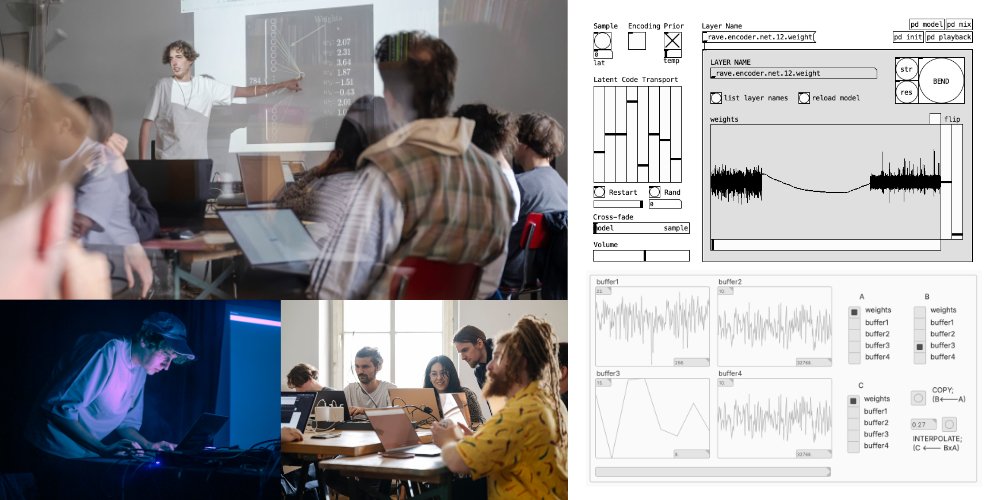
Circuit bending, the practice of rewiring sound-making electronics against their intended design, has long treated failure and misuse as places of musical invention. Reed Ghazala, one of its pioneers, described it through the idea of an "immediate canvas": changes are made intuitively, by ear, without first understanding how the circuit works.
Network Bending carries this ethos into neural audio synthesis. A trained model is defined by its architecture and by a vast set of numbers, weights and biases, learned from data. Bending the network means reaching into those numbers while the model plays and rewriting them by hand. The sound drifts away from what the model was built to do, and on the way opens onto strange sounds that would otherwise stay locked inside its intended function. Instability, breakdown and opacity become compositional material.
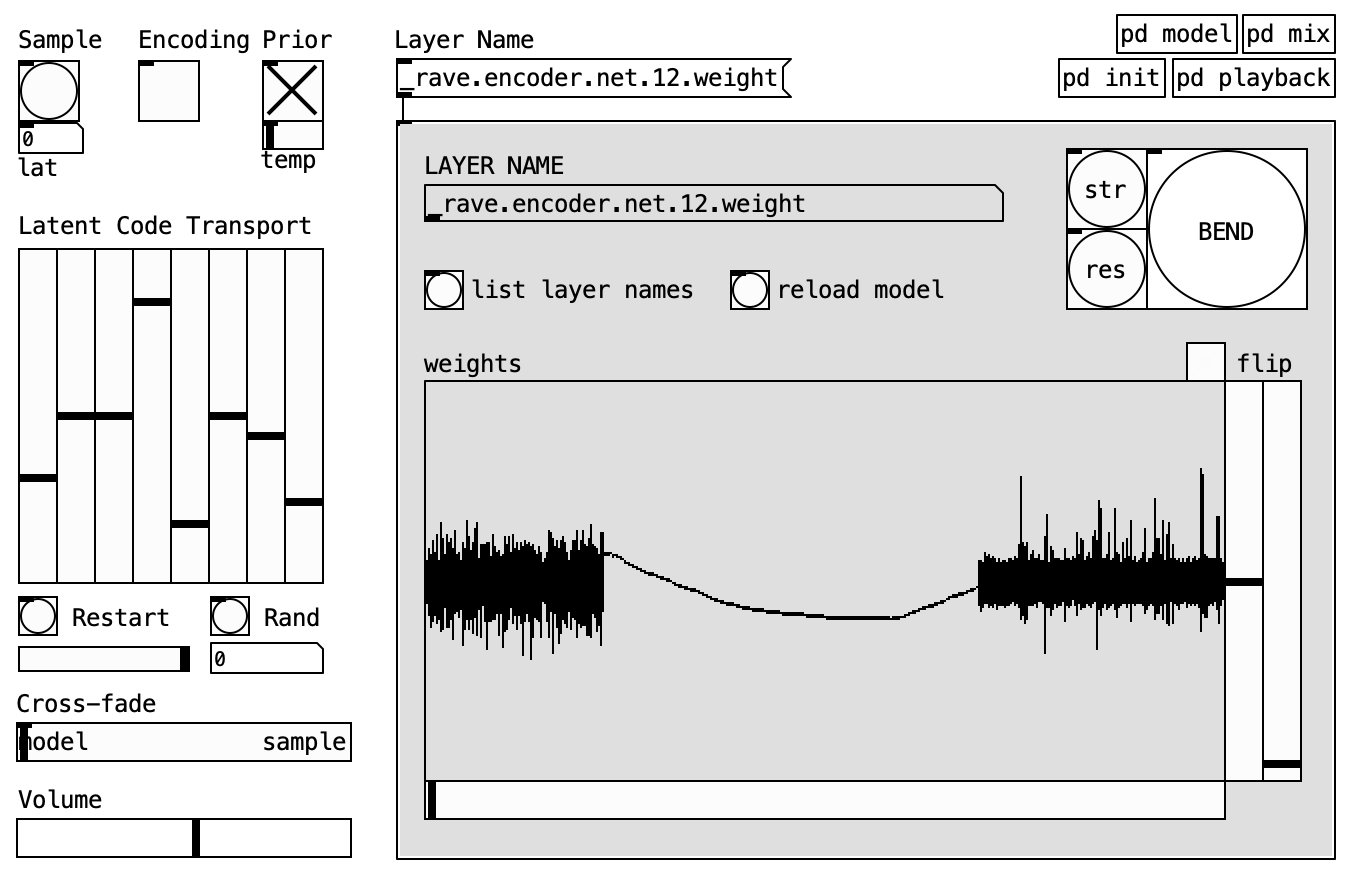
The term itself is not new: Terence Broad and colleagues coined network bending for the expressive manipulation of deep generative models, working on their inner activations. This project takes its own route, intervening in the parameters themselves and keeping the immediate canvas within reach: little computing power, and no machine learning expertise needed to start.
Network Bending works as a compositional practice, a teaching tool, and a way of questioning AI systems that usually arrive as finished, closed products. Opening a model up and breaking it by hand turns a black box into something that can be played, misused and argued with.
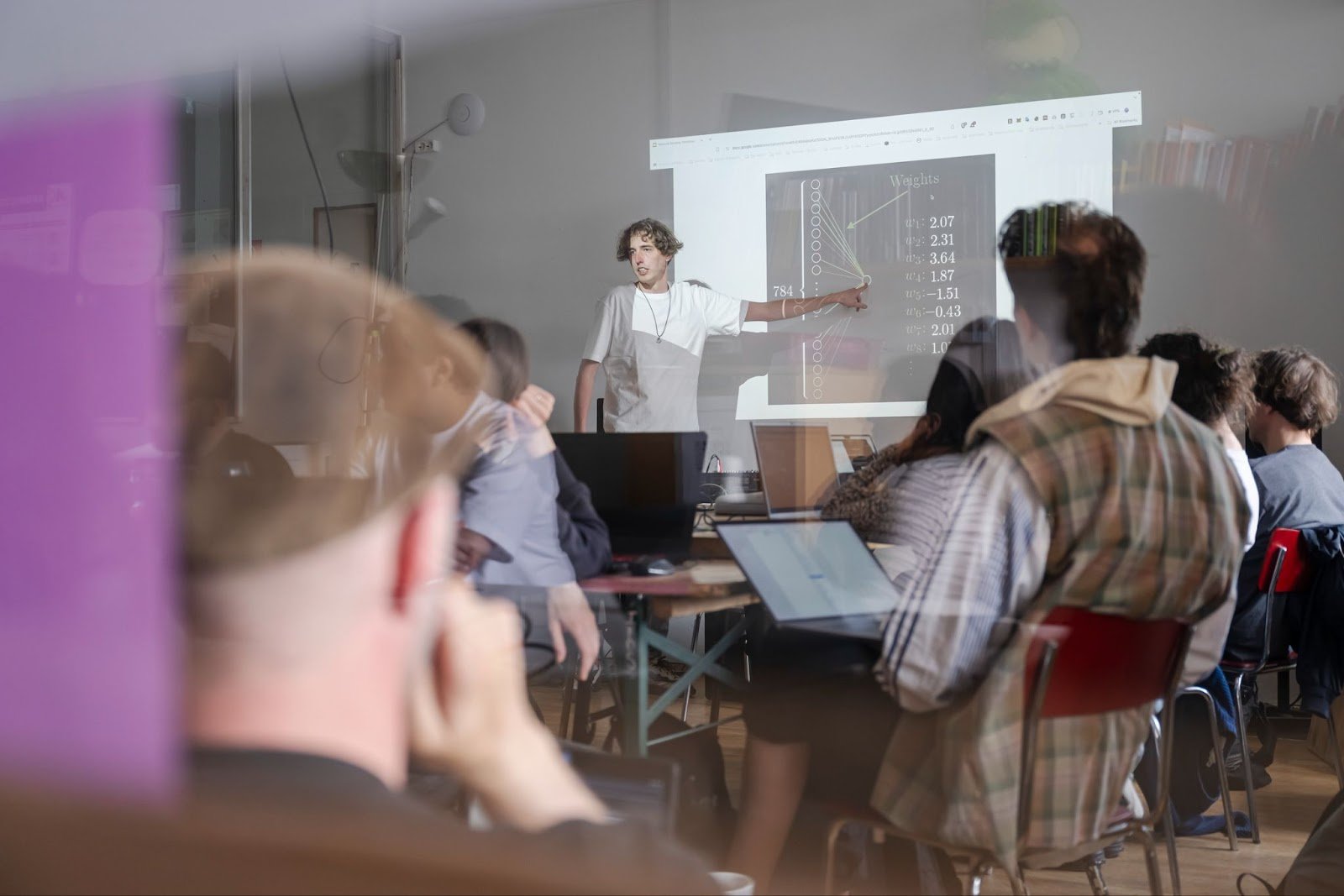
Since 2024 the practice has travelled through workshops at AMRO in Linz and ICLC in Barcelona, and through an open-source Pure Data tool. Some people have taken up the idea and built upon it in various directions:
- Neural network bending in Pure Data by Martin Heinze
- Brave, a hardware controller by Daniel Manz
- a Max/MSP port and netBender, a plugin, by Leo Foletto
Links
- Network Bending as Circuit-Bending Inspired Live Neural Synthesis Hacking, NIME 2026
- Companion site: instrument, Pd patch, modified nn~, demo video and tutorial
- nn_tilde_bending, source code
- Network Bending: Conducting Operations on the Open Bodies of Neural Nets, UPF blog
- Network Bending: Expressive Manipulation of Deep Generative Models, Broad, Leymarie and Grierson
- Workshop pack (zip)
Previous Appearances
- 31.05.25 Workshop @ ICLC 2025, Barcelona
- 05.24 Workshop @ AMRO 2024, Linz
- Used in Seven Manifolds and Broken Forecasts